
As ERCOT moves through the shoulder season, recent trading has underscored a familiar but often underestimated dynamic in the Texas power market: early-season heat combined with elevated seasonal thermal outages can produce outsized volatility in both the Day-Ahead and Real-Time markets. While average prices remain well below summer scarcity levels, the dispersion around those averages has widened noticeably, reinforcing that risk management decisions made in the Spring matter just as much as those made in August.
 Early Heat Is Pulling Forward Summer-Like Load Conditions
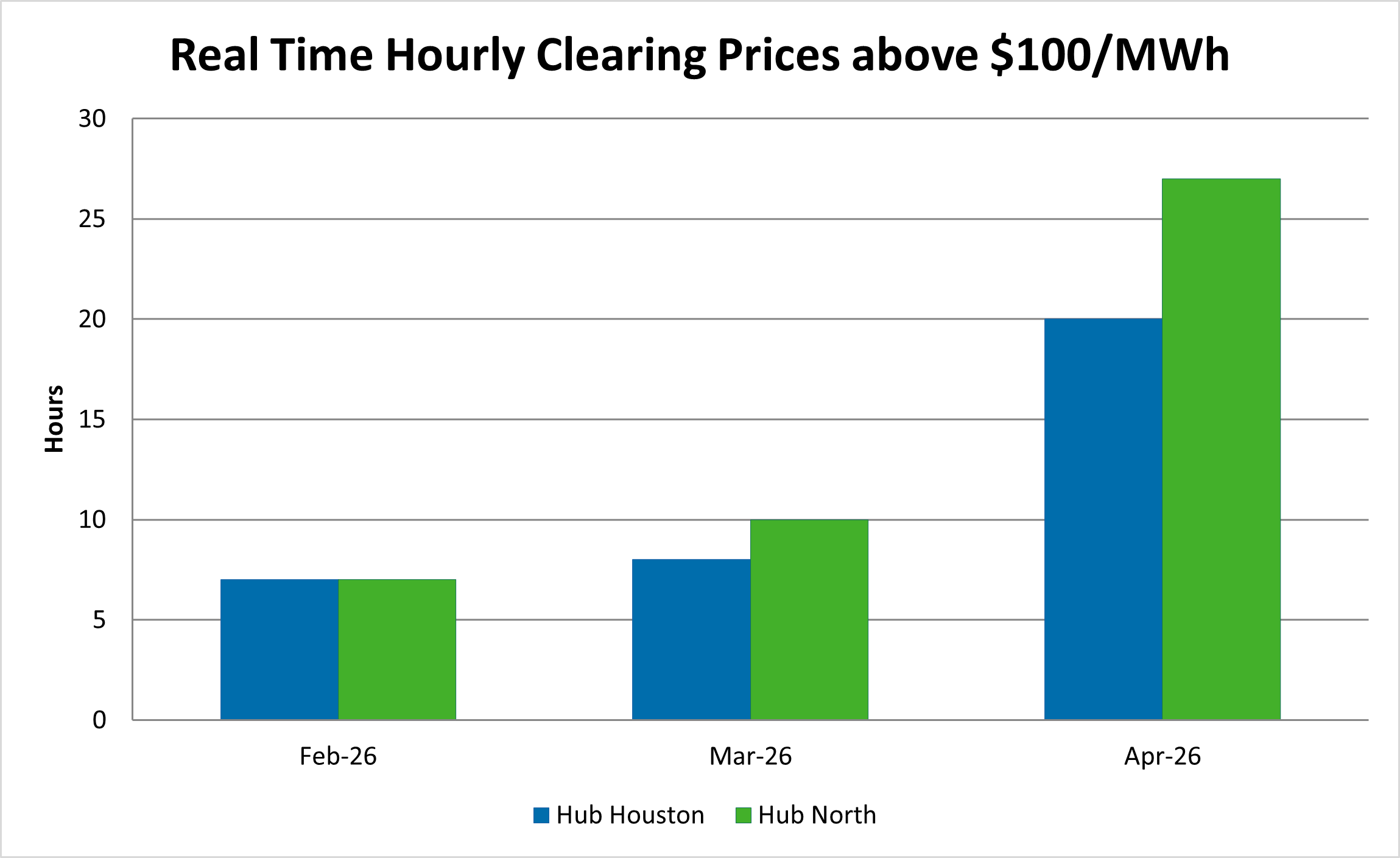 Early Heat Is Pulling Forward Summer-Like Load Conditions
One of the defining characteristics of the past several weeks has been the arrival of above-normal temperatures earlier than many market participants anticipated. Highs in the mid-to-upper 90s across key load centers have caused air-conditioning demand to accelerate sooner than historical norms, pushing afternoon net load closer to early-summer levels.
From a market perspective, early heat presents a forecasting challenge. Load forecasts in April and early May typically assume moderate cooling demand and ample operating reserves. When temperatures surprise to the upside, ERCOT is forced to rely more heavily on fast-ramping thermal units and storage resources, particularly during late afternoon and early evening hours when solar output begins to roll off. That dynamic has been reflected in sharper intraday price swings and wider spreads between on-peak and off-peak hours in both DAM and RTM pricing.
Seasonal Thermal Outages Are Reducing Dispatchable Flexibility
Compounding weather-driven demand pressure is the annual spring maintenance season for thermal generators. Gas, coal, and nuclear units frequently schedule outages during the shoulder months to prepare for sustained summer operations. While this is a rational and necessary practice, it leaves the system with a thinner dispatchable bench at precisely the moment when load volatility increases.
Recent outage levels have reduced ERCOT’s ability to absorb forecast error or renewable underperformance without tapping higher-priced resources. In several intervals, the system has leaned on batteries and peakers to fill short-term gaps, which can push Real-Time prices materially above Day-Ahead clears when conditions tighten unexpectedly.
 Day-Ahead vs. Real-Time: Forecast Risk Is Back in Focus
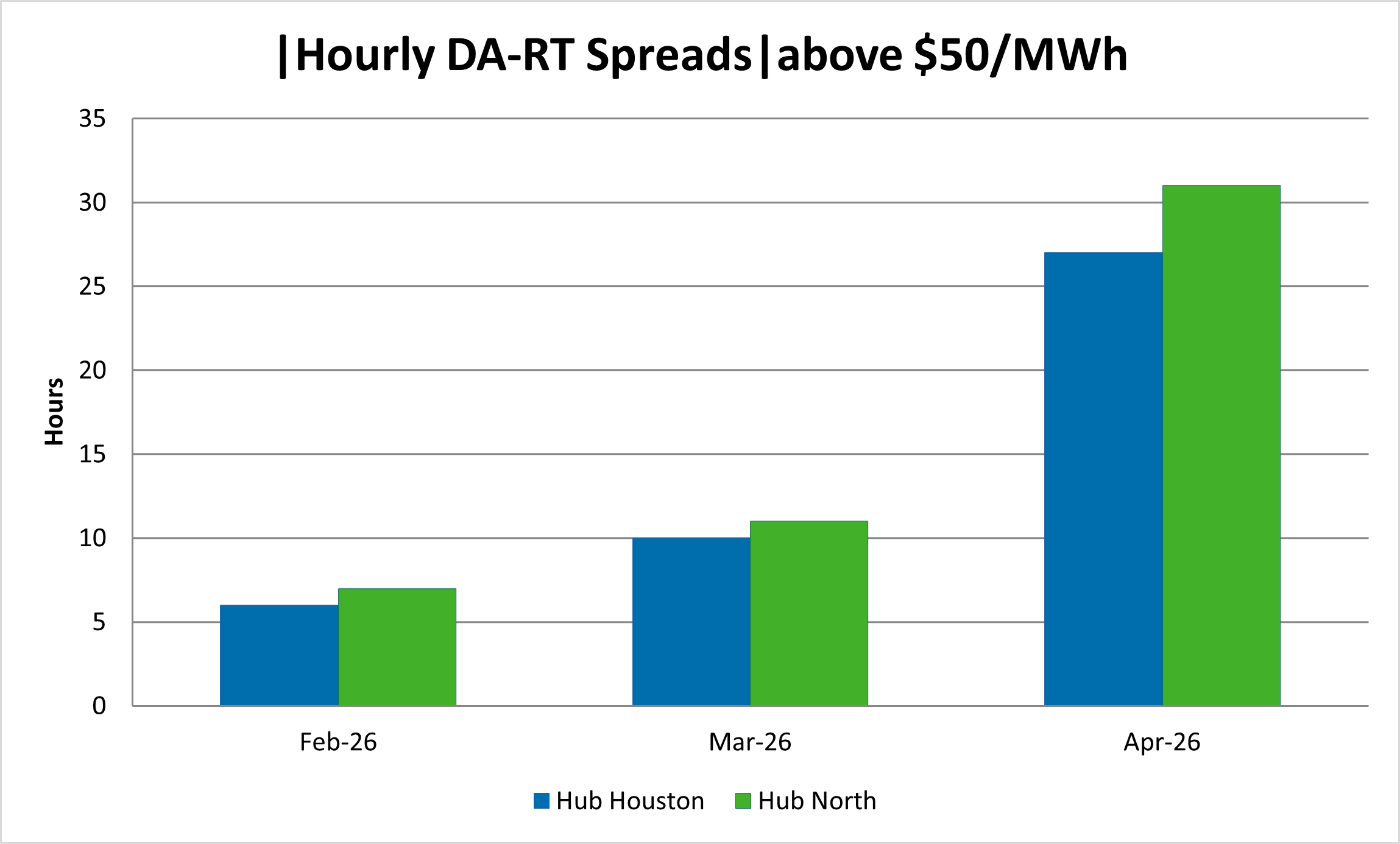 Day-Ahead vs. Real-Time: Forecast Risk Is Back in Focus
These conditions have reintroduced meaningful basis and forecast risk between DAM and RTM prices. On days when heat and renewable forecasts align, the Day-Ahead market has been reasonably efficient. However, when load or wind expectations miss — especially during the afternoon ramp — Real-Time prices have moved quickly to reflect scarcity premiums.
For generators, this environment can reward operational flexibility and smart dispatch strategies. For large loads and retail customers exposed to Real-Time pricing, it underscores the importance of managing intra-day exposure even outside the traditional summer peak window. The last several weeks are a reminder that ERCOT’s volatility profile is no longer confined to July and August; shoulder seasons increasingly matter.
Storage Is Absorbing Volatility—but Not Eliminating It
ERCOT’s rapidly growing battery fleet continues to play a stabilizing role, particularly in covering short-duration imbalances and reducing the frequency of extreme price spikes. That said, storage does not eliminate volatility — it reallocates it. When outages and heat compress reserves, batteries tend to discharge into the highest-priced intervals, amplifying price signals over shorter windows rather than flattening them entirely.
This has been evident in sharper price ramps and steeper peak-hour pricing, even as system-wide averages remain moderate. Market participants relying on historical averages alone may underestimate the financial impact of these short-lived but material price excursions.
Looking Ahead: Shoulder Season No Longer Means Low Risk
As ERCOT heads deeper into summer, the key takeaway is clear: the shoulder season is no longer a low-volatility environment by default. Early heat events, combined with concentrated outage schedules and a grid increasingly dependent on precise forecasting, create conditions where price risk can surface quickly and with little warning.
Participants should expect continued sensitivity to weather revisions, outage changes, and renewable forecast swings over the coming weeks. Hedging strategies, operational readiness, and intra-day market monitoring remain critical — even before the first official heat wave of summer arrives.