
The Four Coincident Peaks (4CP) are determined by the highest 15-minute interval of ERCOT grid-wide demand in each of the four summer months (June, July, August, and September). A customer’s 4CP demand is measured as the customer’s demand during each of these Four Coincident Peaks, which are then averaged and used as the basis for the majority of the transmission portion of the TDSP charges for the following year. The monthly coincident peak is typically set between 3 pm and 6 pm CST during the period of the day with the highest temperatures, but it can happen any day, regardless of weekend, holiday, etc. For most customers with IDR meters, curtailing usage during ERCOT system 4CP intervals gives you the opportunity to reduce certain utility charges (mostly the transmission cost recovery factor) that are pass through items on your bill. These charges are based on customer demand during peak load intervals and can make up a significant portion of your overall cost of energy. The 4CP Program is 100% voluntary.
Changes on the Horizon for How Transmission Cost Recovery Cost is Calculated
PUCT staff filed a draft report on May 4 (Project No. 58484, “Evaluation of Transmission Cost Recovery”) under Senate Bill 6, recommending a meaningful overhaul of how wholesale and retail transmission costs are allocated in ERCOT.
- The headline structural change is a proposed shift from the long-standing 4CP methodology, measured at 15-minute intervals, to a 12CP framework measured at 30-minute intervals. Staff cited winter peaks increasingly rivaling summer peaks and growing reliability needs during shoulder months – when generators take maintenance outages – as the underlying drivers.
- On the retail side, staff recommended eliminating cost allowances for large load customers, requiring annual updates to allocation factor values, and applying a minimum billing demand to new large loads served by investor-owned utility distribution providers – a direct response to the pace of data-center interconnection requests.

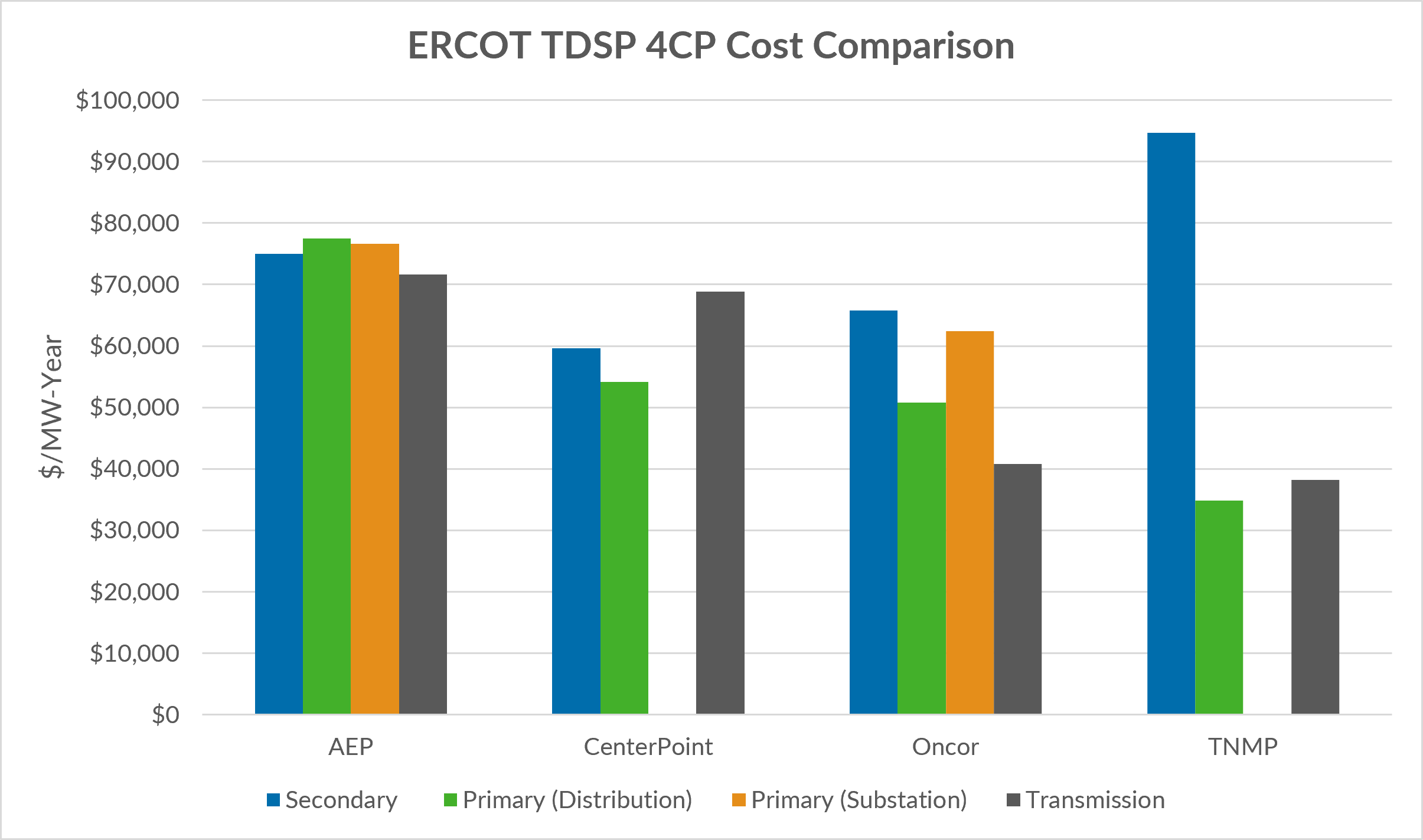
The key open question is whether the minimum demand charge gets bifurcated, applying only to ultra-large or “hyperscaler” loads above a megawatt threshold rather than the entire large-load class. Chairman Gleeson and other commissioners signaled openness to that approach, and stakeholder input from traditional industrials is encouraged before a Proposal for Publication targeted for the June 18 open meeting.