
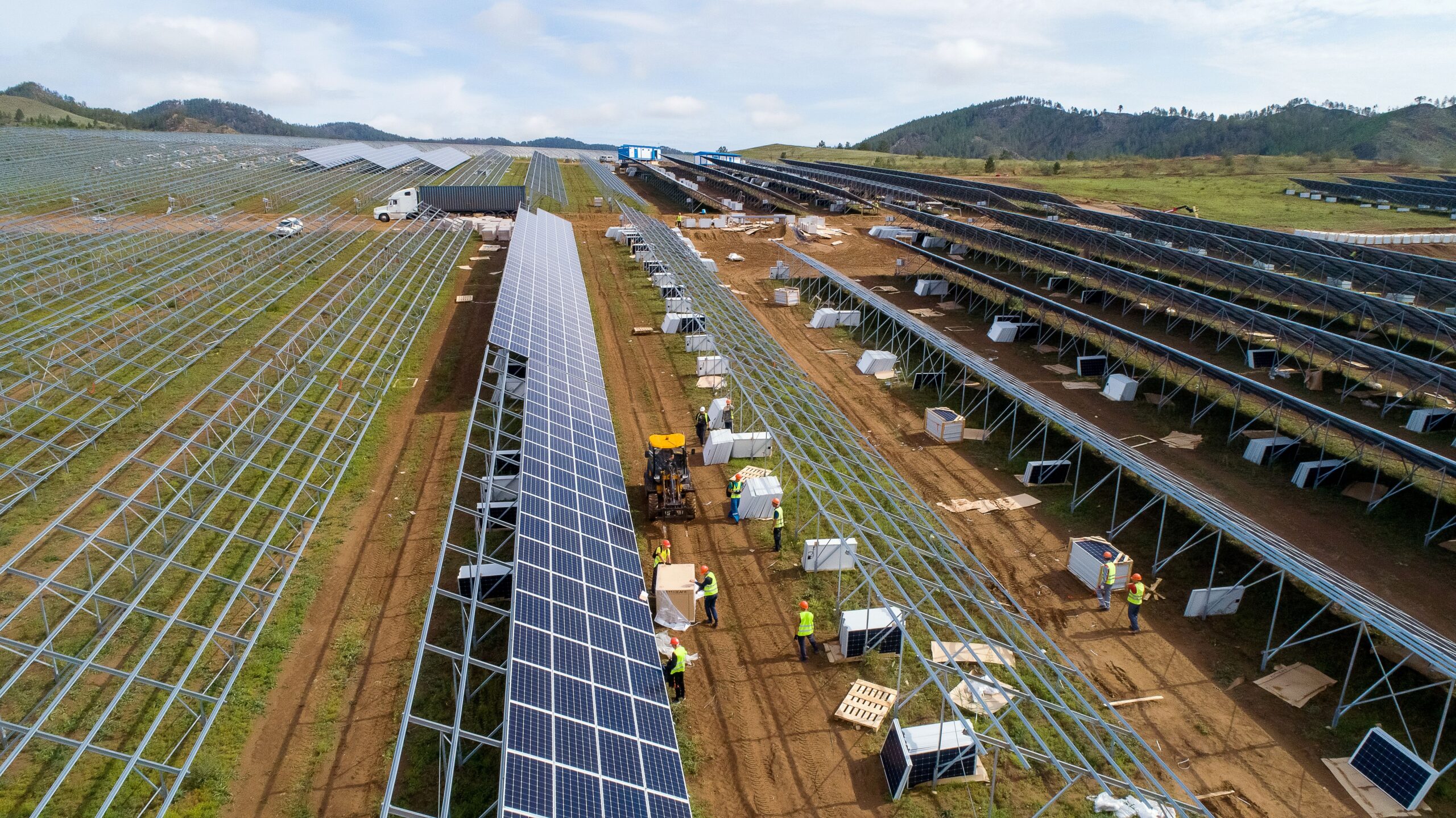
On August 15, 2025, the U.S. Treasury and IRS issued updated guidance (Notice 2025-42) clarifying what qualifies as the “beginning of construction” for wind and solar projects seeking Section 45Y (Production Tax Credit) or Section 48E (Investment Tax Credit) under the One Big Beautiful Bill Act.
Previous guidance allowed two methods to achieve safe harbor status: the Physical Work Test and the Five Percent Safe Harbor. The Physical Work Test, which defines construction starting for wind or solar projects when “physical work of a significant nature” begins, includes both on-site work (such as grading and foundation work) as well as off-site work (such as manufacturing of components). Additionally, the Physical Work Test requires “continuous construction” to maintain safe harbor status allowing for limited excused delays including weather and supply chain issues. Five Percent Safe Harbor, a method frequently used by developers, defines construction as commencing when 5% or more of the required capital to build the project is spent.
Five Percent Safe Harbor Option Eliminated for Large Projects
The Treasury Department’s updated guidance last week, effective September 2, 2025, eliminates the Five Percent Safe Harbor option for projects over 1.5 MW capacity. This now limits the option only to smaller, low-output solar facilities of that size or less, and requires developers to maintain “continuous construction” and not just “continuous efforts” as under prior guidance. Transfers (such as the sale of a project which may invalidate safe harbor status) and the quickly approaching effective date make the pursuit of safe harbor status more challenging.
Updated Guidelines More Stringent
Developers who begin construction between September 2, 2025, and July 4, 2026, will have four years to complete their project and claim the credits. Projects starting after July 4, 2026, must be placed in service by the end of 2027. The updated rules, which are not retroactive, have been viewed as more stringent, and the shift toward physical-work requirements introduces uncertainty as to how much work is sufficient to secure tax-credit eligibility.
The updated rules will make it more difficult for utility scale wind and solar projects to qualify for safe harbor status and the associated four-year window to complete a project after construction has started. Practical limitations from EPC firms and others needed to complete physical work are likely to shrink the pool of projects in development in the coming years.