
U.S. natural gas consumption (excluding natural gas used for pipeline transport and LNG exports) is projected to rise by 1% in 2025, reaching a record 91.4 billion cubic feet per day (Bcf/d), according to the latest Short-Term Energy Outlook from the U.S. Energy Information Administration (EIA). Growth is expected across most sectors, with the exception of electric power, which had been the primary driver of demand over the past decade.
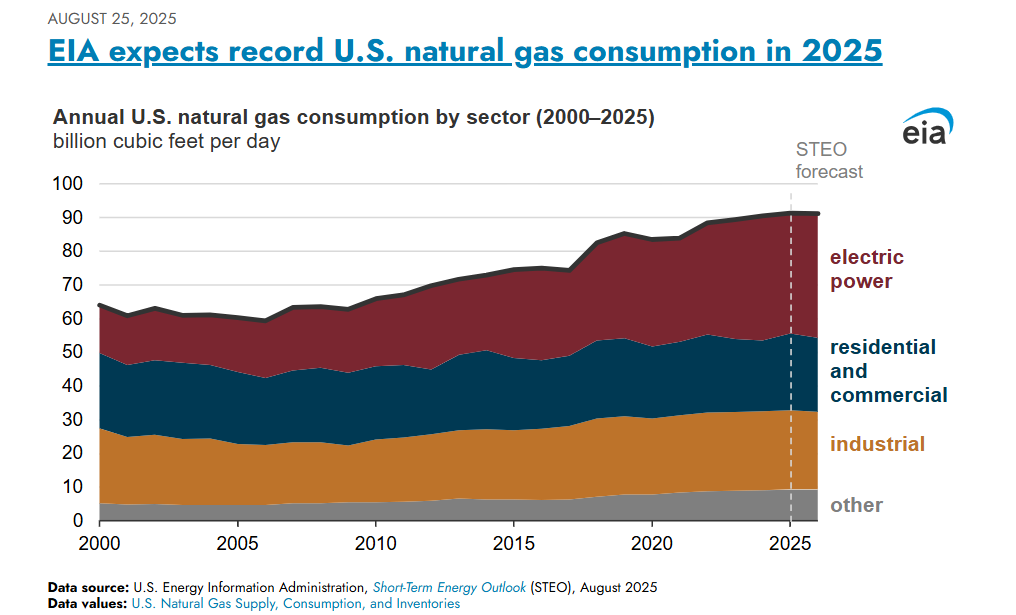
Much of the increase is tied to exceptionally high usage early in the year. In January 2025, natural gas consumption surged to 126.8 Bcf/d—5% higher than the record set in January 2024—while February demand reached 115.9 Bcf/d, surpassing the previous February record from 2021. These peaks were fueled by colder-than-normal winter weather, including a mid-January polar vortex.
Natural gas use typically reaches its highest levels during winter, when heating demand rises, particularly in the residential and commercial sectors. About 45% of U.S. households rely on natural gas as their primary heating source, according to U.S. Census Bureau data.
By spring and summer, consumption trended lower compared with the same period in 2024, with the decline most evident in the electric power sector. While natural gas continues to be the leading fuel for electricity generation, its market share has slipped this year as coal, solar, and wind captured a larger portion of the power mix. The forecast for natural gas consumption in 2026 is expected to decrease slightly because of an expected milder winter.