
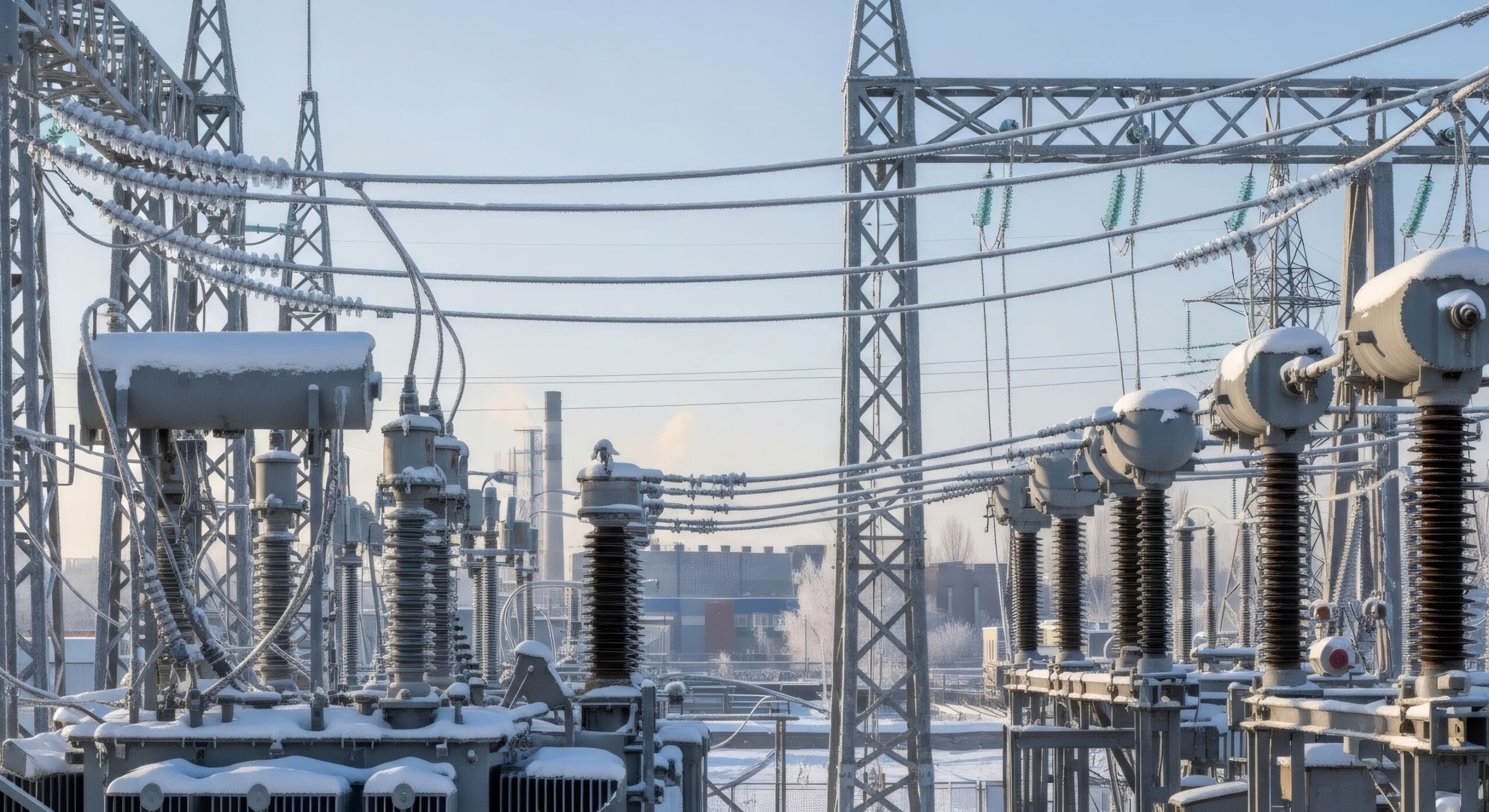
The recent Winter Storm Fern exposed ongoing reliability challenges across the U.S. bulk power system, with industry leaders characterizing the event as a “near miss.” According to North American Electric Reliability Corp. (NERC) CEO Jim Robb, the grid avoided more severe disruption largely due to milder-than-forecast temperatures and significant demand reduction from widespread business and school closures. While these factors helped prevent broader outages, regulators emphasized that reliance on incidental load reductions is not a sustainable or desirable reliability strategy.
Dispatchable Generation vs. Renewables: Performance Under Scrutiny
The event has reignited debate over the role of dispatchable generation, particularly coal and natural gas, in maintaining grid stability during extreme weather. Utility representatives and federal officials highlighted the ability of thermal resources to provide continuous output and essential reliability services such as voltage and frequency support. However, performance data presented during congressional hearings showed that many coal and gas units underperformed relative to their accredited capacity, with notable outage rates across major markets including SPP, MISO, and PJM. In contrast, wind and solar resources in several regions exceeded expectations, underscoring the operational value of a diversified generation mix.
Emergency Federal Actions and Cost Concerns
The Trump administration’s use of emergency authority under Section 202(c) of the Federal Power Act to delay coal plant retirements has become a focal point in this discussion. Energy Secretary Chris Wright defended the policy, arguing that maintaining these units helped meet peak demand and mitigate price spikes during the storm. The Department of Energy also issued dozens of emergency orders to enable backup generation at industrial sites and across multiple grid operators, with “hundreds” of sites reportedly dispatched. While these interventions supported system reliability, they have raised concerns about cost impacts, with some estimates suggesting billions in potential annual costs if similar measures are broadly extended.
Conflicting Performance Data Across Resource Types
Operational performance of specific coal units remains contested. While federal officials cited steady output from certain plants during the cold snap, independent analysis indicated relatively low average capacity factors for some of the same facilities. Meanwhile, offshore wind assets—such as the Vineyard project—demonstrated strong performance during the event, further complicating the narrative around resource adequacy and reliability. These contrasting outcomes highlight the importance of evaluating real-world performance data rather than relying solely on theoretical capabilities.
Gas-Electric Coordination Improves, but Risks Persist
Finally, the storm highlighted incremental progress in gas-electric coordination, a critical factor in winter reliability. Industry and government stakeholders reported improved communication and preparation compared to prior events, particularly following lessons learned from the 2022 winter storm. Nonetheless, fuel supply risks and generator outage levels remain areas of concern. Overall, the event reinforces a central takeaway for energy market participants: reliability in extreme conditions depends not on any single resource type, but on system flexibility, fuel security, and continued operational coordination across the power and natural gas sectors.